
Choline Chloride for Root & Tuber Expansion

Choline Chloride Feed Additive Market Overview
October 3, 2026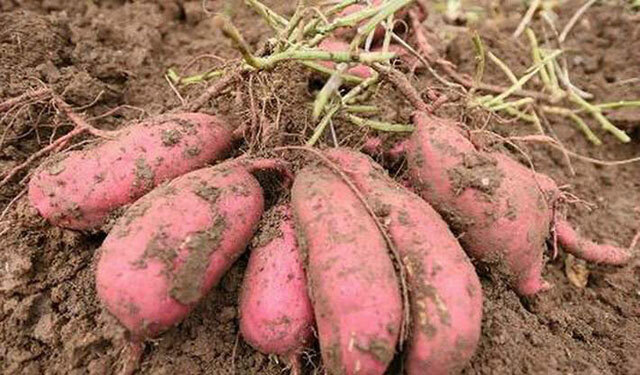
Choline Chloride for Rapid Root and Tuber Expansion
I. Market Prospects of Choline Chloride
After choline chloride entered China, influenced by Japan, its main promotion direction was also placed on tuber crops, primarily used as a sweet potato expansion agent on sweet potatoes. The results were very obvious and the yield increase was astonishing. However, the overly narrow application scenario limited its development, and the entire industry completely underestimated this product’s market prospects.
In recent years, a series of policies have been introduced — the dual reduction of pesticides and fertilizers, the ban on highly toxic pesticides, and the ban on hormone-type pesticides — prompting everyone to turn their attention back to choline chloride, a very safe plant growth regulator, and increasing promotion efforts for choline chloride on various crops.
As a result, the entire industry discovered that choline chloride has an astonishing yield-increasing effect on crops, especially on crops with underground root and stem expansion, such as peanuts, sweet potatoes, potatoes, yams, ginger, garlic, onions, and so on, with yield increases of over 30%. It also has astonishing yield-increasing potential for rice, corn, wheat, as well as grapes, apples, and melons and vegetables.
Choline chloride has leapt to become one of the most promising agricultural input products, especially the 60% soluble concentrate and aqueous solution, which are suitable for mixing with other regulators, fertilizers, and fungicides, making them the preferred product in current mixed package products.
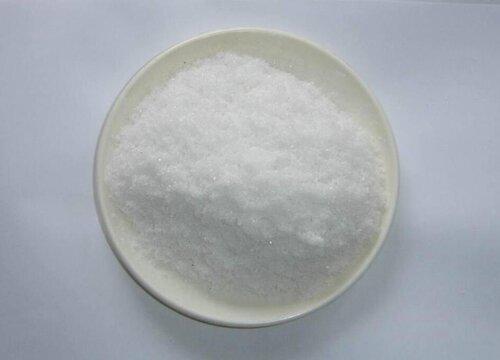
II. Application of Choline Chloride on Various Crops
1. Peanuts
Years of experiments have shown that under conditions of sufficient water and fertilizer, spraying choline chloride three times per season on peanuts can generally increase yield by about 30%, with a very significant yield-increasing effect.
Choline chloride not only promotes photosynthesis in peanut leaves, but also promotes the growth of underground roots and fruits, promotes the formation and downward penetration of peanut pegs, and promotes pod formation and seed growth. Therefore, it can be used during the early flowering stage, full flowering stage, and pod-setting stage of peanuts. The specific usage methods are as follows:
(1) Early flowering stage: In the early flowering stage of peanuts, use 15-20 ml of 60% choline chloride aqueous solution, dilute with 30 kg of water for uniform spraying. This can significantly improve leaf photosynthetic efficiency, initiate early root primordium development, and promote peg formation and growth.
(2) Full flowering stage: In the full flowering stage of peanuts, use 15-20 ml of 60% choline chloride aqueous solution, dilute with 30 kg of water for uniform spraying. This not only improves leaf photosynthesis, but also controls stem and leaf growth, promoting peg penetration and pod growth.
(3) Pod-setting stage: In the pod-setting stage of peanuts, use 15-20 ml of 60% choline chloride aqueous solution, dilute with 30 kg of water for uniform spraying. This promotes pod growth and seed formation, making pods fuller and increasing the full pod rate.
Specific cases:
(1) In the Nanyang area of Henan, a distributor used choline chloride on peanuts with very obvious results. Using choline chloride in a yield-increasing package worked very well.
(2) In the Northeast region, a distributor combined choline chloride soluble concentrate with a yield-increasing package (containing fertilizer), and the yield increase was very obvious. They sell dozens of tons a year, and local farmers all recognize it — it has become a habit.
2. Potatoes
When potato tubers begin to form or at the early stage of expansion — that is, starting from the bud stage of potatoes — use 15-20 ml of 60% choline chloride aqueous solution per mu, dilute with 15-30 kg of water, and spray on stems and leaves. Spray once every 10-15 days, for 3-4 consecutive applications. This can increase plant carbohydrate, protein, and chlorophyll content, promote root growth, and promote rapid potato expansion, increasing yield by about 20% per mu.
Of course, the tuber expansion period of potatoes is also the period of greatest fertilizer demand. In actual production, when using choline chloride, combine it with high-phosphorus high-potassium fertilizer Jiamei Brain Platinum, and combine with foliar regulation such as 14-hydroxyl brassinolide, chlormequat, etc., to achieve better yield-increasing and quality-improving effects!
3. Garlic
Since garlic uses underground bulbs as the main product organ, bulb size determines product yield and quality. Therefore, management during the bulb expansion period is crucial.
After supplementing with large amounts of water and fertilizer during the garlic bulb expansion period, plant growth regulator choline chloride should be sprayed at the appropriate time, because choline chloride acts as a commander of water and fertilizer nutrients. It can increase leaf photosynthesis speed, increase chlorophyll, promote cell division and expansion, rapidly transport nutrients to the bulbs, increase starch, protein, and sugar accumulation, promote early expansion of axillary buds, promote enlargement of small garlic cloves, and increase the proportion of large and medium garlic heads (bulbs). According to years of experiments, after using choline chloride, the yield increase is obvious, and the proportion of small garlic heads is greatly reduced.
Specific usage method for choline chloride: After garlic enters the bulb expansion period, use 15-20 ml of 60% choline chloride soluble concentrate per mu, dilute with 15-20 kg of water for uniform spraying. Spray once every 10-15 days, for 2-3 consecutive applications. This promotes rapid garlic bulb expansion, prevents premature plant senescence, and improves garlic yield and quality.
In actual production, when using choline chloride, combine it with high-phosphorus high-potassium fertilizer, and combine with foliar regulation such as 14-hydroxyl brassinolide, naphthaleneacetic acid, etc., to achieve better yield-increasing and quality-improving effects!
4. Sweet Potatoes
After choline chloride was first developed in Japan, it was used on tuber crops. As early as 1987 in Japan, it was registered as a plant growth regulator and approved for registration as a sweet potato rooting agent and tuber enlargement agent.
The main function of choline chloride is to increase chlorophyll, soluble protein, and plant carbohydrate content in leaves, manufacture more nutrients for transport to underground tubers, promote rapid expansion of underground roots and stems, increase the proportion of large and medium tubers, and improve sweet potato yield and quality. From the growth and development characteristics of sweet potatoes above, it can be seen that the expansion period of underground tubers begins from the vigorous stem and leaf growth period of sweet potatoes. Therefore, the best time to spray choline chloride is during the vigorous stem and leaf growth period of sweet potatoes.
According to the growth and development characteristics of sweet potatoes, spraying at the following stages gives the best results.
(1) Branching and tuber-setting stage: Use 20 ml of 60% choline chloride soluble concentrate per mu, dilute with 20-30 kg of water for uniform spraying. This can improve leaf photosynthetic rate, promote root growth, promote early root primordium germination, and increase tuber number.
(2) Stem and leaf growth stage: Use 20-25 ml of 60% choline chloride soluble concentrate per mu, dilute with 20-30 kg of water for uniform spraying. This improves leaf photosynthetic efficiency, promotes root growth, and promotes tuber expansion.
(3) Tuber expansion stage: Use 30 ml of 60% choline chloride aqueous solution per mu, dilute with 30 kg of water for uniform spraying. Spray once every 10 days, for 2 consecutive sprays. This promotes rapid underground tuber expansion, increases the proportion of large and medium tubers, and improves sweet potato yield.
In actual production, when using choline chloride, combine it with high-phosphorus high-potassium fertilizer Jiamei Brain Platinum, and combine with growth control such as paclobutrazol, mepiquat chloride, and foliar regulation such as 14-hydroxyl brassinolide, naphthaleneacetic acid, etc., to achieve better yield-increasing and quality-improving effects!
4. Ginger
Usage method: From the three-branch stage to the vigorous growth period of ginger; use 20 ml of 60% choline chloride soluble concentrate per mu, dilute with 30-40 kg of water. Can be sprayed 2-3 consecutive times, with intervals of 10-15 days.
Of course, this period is also the period of greatest fertilizer demand. In actual production, when using choline chloride, combine it with high-phosphorus high-potassium fertilizer Jiamei Brain Platinum, and combine with foliar regulation such as 14-hydroxyl brassinolide, naphthaleneacetic acid, etc., to achieve better yield-increasing and quality-improving effects!
5. Onions
Usage method: At the early stage of onion bulb expansion, use 20 ml of 60% choline chloride soluble concentrate per mu, dilute with 20-30 kg of water for conventional spraying. Then spray again after 10-15 days, for 2-3 consecutive applications.
1. Why is there no effect after using choline chloride?
Choline chloride is a plant growth regulator that has been used for over 30 years and has stood the test of time. Its yield-increasing effect is very good — this is beyond doubt. So if there is no effect after use, it is generally mainly due to the following problems.
(1) Insufficient dosage.
Through experiments by a large number of researchers, the scientific usage method for choline chloride is generally 60% soluble concentrate, using at least 20-25 ml per mu, not exceeding 30 ml, diluted with 20-30 kg of water — this gives the best effect!
Some people arbitrarily change the dosage when using it in the field, and in the end there is no effect after use.
(2) Impact of product quality.
Choline chloride products circulating on the market vary in effect due to differences in technical material purity and added adjuvants! The technical material purity of choline chloride ranges from 90%, 95%, to 98%. Different companies purchasing technical materials of different purities will bring differences in product quality and price!
Because the amount of choline chloride used per mu is not large, the purity of the technical material still has a great impact on the field crop use effect. Some companies use lower-purity technical materials to make formulations, and even if about 20 ml is sprayed per mu, the desired effect cannot be achieved.
Therefore, for choline chloride, everyone should preferably purchase from companies that value their brand. They generally value product quality and will purchase higher-purity technical materials!
(3) Choline chloride works better when combined with fertilizer.
Because the main function of choline chloride is to promote plant photosynthesis and promote plant growth. And plant growth requires sufficient nutrients. Therefore, when using choline chloride, it is even more necessary to supplement crops with nutrients. So choline chloride used in combination with fertilizer works better.
2. Can choline chloride be applied by flushing?
Choline chloride can theoretically be applied by flushing, but in actual application it is all foliar spraying, because when sprayed, choline chloride is easily absorbed by leaves and enters the plant body to take effect. If applied by flushing, it mainly relies on root absorption, so a portion of the active ingredients will be lost, causing great waste.
The single-use amount of choline chloride cannot be too large — more is not better — so there is no need for flushing application.
3. What regulators and fertilizers is choline chloride commonly combined with?
Different regulators have different emphases, and combined use gives the best effect. Choline chloride is generally combined with regulators such as naphthaleneacetic acid, brassinolide, and chitosan, producing better effects on plant growth.
Regarding fertilizers, choline chloride is generally used in the later stages of crop growth, so it is generally combined with high-phosphorus high-potassium Jiamei Brain Platinum, such as potassium dihydrogen phosphate, etc. Choline chloride regulates the transport and transformation of nutrients, and plants grow better.
-
Choline Chloride: Boosts Peanut, Potato & Garlic Yield
-
60% Choline Chloride Liquid for Tuber Crops
-
Choline Chloride Plant Growth Regulator Guide
-
How Choline Chloride Increases Root Crop Yields
-
Choline Chloride for Sweet Potato & Ginger Expansion
-
Best Choline Chloride Dosage for Tuber Crops
-
Choline Chloride + Fertilizer: Better Yield Results